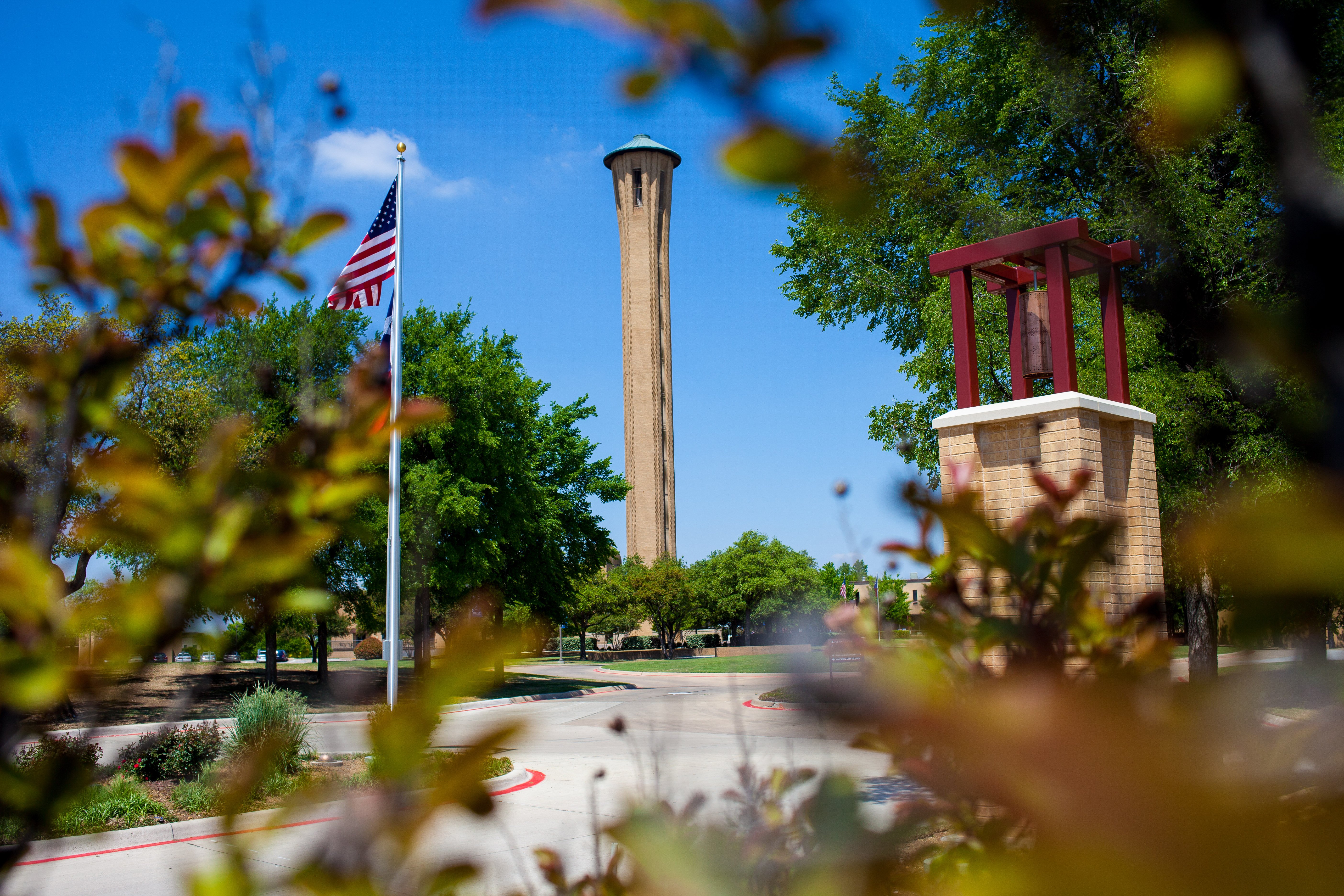
When Rebecca Burgess, BA ’06 PhD ’24, describes life on the UDallas campus, she lightheartedly notes: “I filled every role except for parent.” She worked in the Office of Student Life in a number of positions including Acting Director of Student Life, she was a graduate student and she taught politics as an adjunct instructor. It was in part due to this combination of immersion in academia and in the real-life issues of students that she has become the public policy expert on veterans issues that she is today, one who has testified three times in front of Congress.
After studying literature and French as an undergraduate at UDallas, Burgess thought she was ready to move on. But between professors encouraging her to consider graduate school and a job offer from Student Life, she began a new phase at the university in dual roles as student and administrator.
Burgess readily admits that wearing several hats at once was overwhelming. But looking back she says that experiencing the classroom and human affairs simultaneously “really gave me that kind of grounding on both sides.” She had an opportunity to consider policy and the thought behind it in the classroom, but to see policy-in-action when caring for individual students as an administrator. She explained: “We can talk about John Locke and Rousseau in a classroom, but what truly matters in those arguments?”
When she considered who these thinkers were and why they mattered she had the real life ‘politics’ of the student body to consider: “What is it that matters to these 18-22 year olds? What causes them angst or true pain?” And importantly to her role on campus and in the future, “How do you run a university and how do you run a society peacefully while giving people latitude and space to become their own person, to be different from each other and to solve conflicts?”
Burgess said her position, where she sometimes interacted with first responders and law enforcement, helped her see how the university community intersected with local and national politics. In these moments in student life, Burgess took to heart the Catholic understanding of the human person, often trying to balance finding the answers to both a “policy problem” and a “human problem.”
Burgess brought this understanding of the juxtaposition of individuals and policy with her throughout her career.
The problems veterans face aren’t just clinical issues or dry policy. ‘They’re about the human soul and what happens to them on the battlefield and afterward’.
Taking UDallas Lessons out into the world
In 2012, Burgess began teaching politics at Hillsdale College where she also served as the deputy editor of Imprimis, a publication which grew to over four million readers during her tenure.
But what she sees as a call to work in public policy came knocking not too long after. Burgess initially turned down an offer to work at the American Enterprise Institute (AEI), a Washington, DC-based think tank, but when she was suddenly hit by a semi-truck in the Michigan winter, she changed her mind.
“I can’t believe I am this stubborn that God literally had to send a semi-truck my way to tell me what I should do. So I moved to Washington, D.C., February of 2014. I’ve been here ever since.”
Looking back, Burgess can now see that she knew she eventually wanted a role that was able to bring together academia and real life issues.
Through various turns of events, veterans came to Burgess’s attention. “No one was studying seriously this immensely interesting, immensely illuminating intersection of veterans and citizenship, veterans and limited government, political theory, history, anthropology, psychology…mental health and the history of medicine.”
And then again, focusing on veteran policy led Burgess back to her UDallas education, recognizing how Aristotle and Plato could be relevant today. The problems veterans face, she said, aren’t just clinical issues or dry policy. “They’re about the human soul and what happens to them on the battlefield and afterward. Thanks to UD, I have access to almost all the tools to try and think about these issues.”
Veterans and the story of American citizenship
While Burgess didn’t immediately think she was suited to tackle public policy for veterans, she soon realized that the intersection of her academic and professional background was just the experience she needed to be successful.
Burgess’s work led her to realize with others that the Department of Veterans Affairs needed substantial reform. Broadly speaking, she wants to flip the narrative so that as a nation we can recognize veterans as “social assets, not social deficits.”
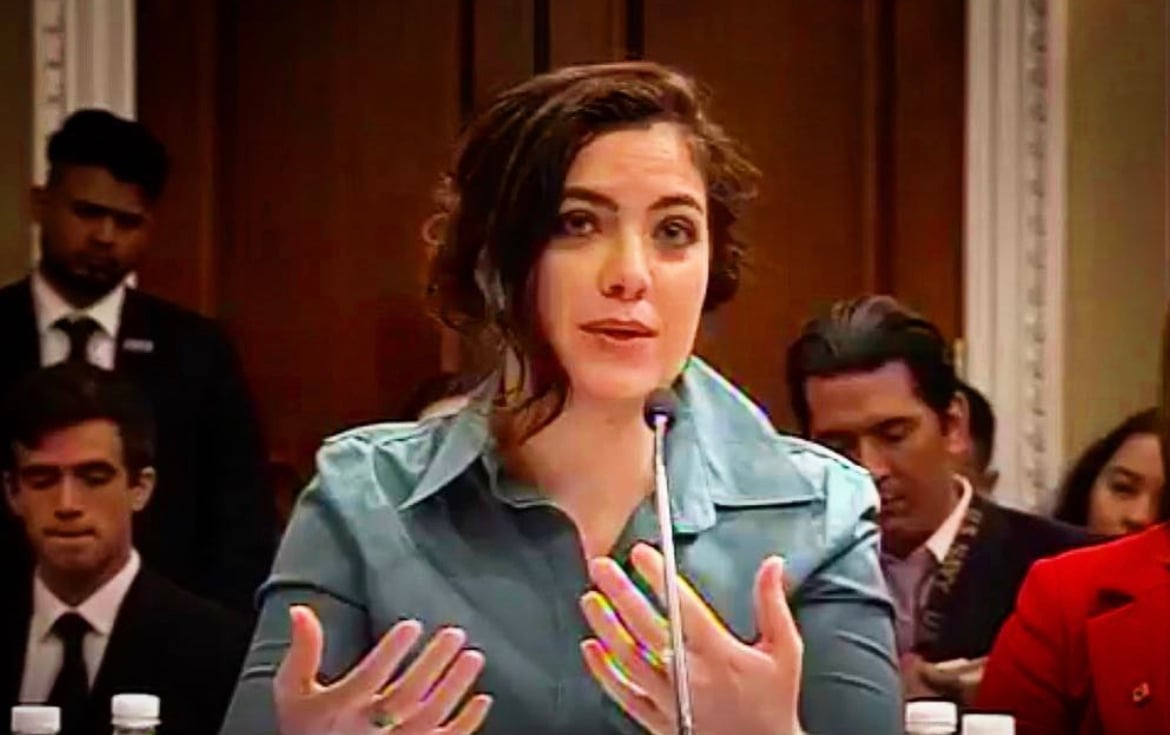
A paper on this topic led very quickly to her first of three times testifying in front of Congress. She naturally was nervous and at times doubted herself: “Who am I? Little Rebecca Burgess from Kalispell, Montana; Post Falls, Idaho and Irving’s University of Dallas.” But then she realized that she had both the knowledge and the message that needed to be heard. “If I can get you to listen in the right ways, legislators to listen in the right ways, we could make a real change that could affect 18 million veterans.”
Change has not happened overnight, but Burgess, now a senior fellow at the Yorktown Institute, a strategic think tank, continues to work to ensure that veterans are given the recognition and the tools they need. Going full circle, alongside her policy work, Burgess teaches in two different college programs for veterans, both at the University of San Francisco and the Warrior Scholar Project at Georgetown University.
In both, she teaches the humanities and helps her students look at citizenship, public service and, inevitably she says, what it really means to be a veteran. She admits she is in “seventh heaven,” bringing some UDallas favorites, like Xenophon, Plutarch, de Tocqueville and the Federalist Papers, into her discussions.
From working with Student Life at UDallas to working with veterans and people on Capital Hill, Burgess’s experience in academia and human life continue to intersect. When asked what she would like people to ultimately understand about veterans, she shared:
“The story of veterans is the story of American citizenship. Veterans are social assets, not social deficits. They are the unacknowledged permanent ambassadors of public service and of thinking about the common good in a rights-based—an individual rights-based regime. So we need to think about them as key components of a whole cycle of democratic civic life.”